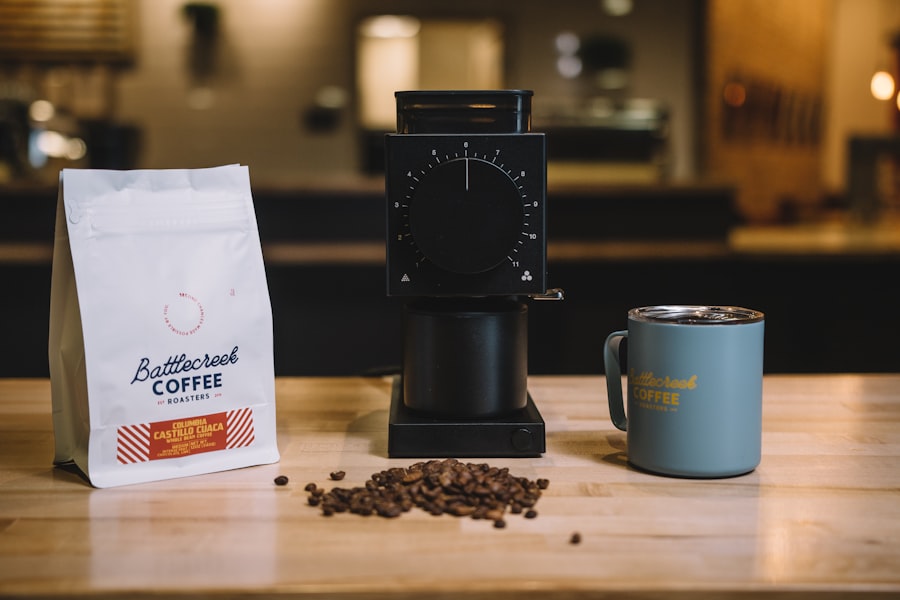
We roast three coffees at a time and let them be enough. Below is what's on offer, why we chose each one, and how to brew it at home.
Huila, Colombia · 1,750m · Caturra
From Don Eduardo Méndez, who farms two hectares above the town of Pitalito. Cherry is picked ripe, depulped within four hours, and fermented in tile tanks for thirty hours before a sun-dry on raised African beds.
In the cup: dried apricot at the front, brown sugar through the middle, a long finish that reminds us of evening light on the back porch. A coffee that does not need to be sweetened.
Yirgacheffe, Ethiopia · 2,050m · Heirloom
From the Konga washing station in the Gedeo zone — though "washing" is misleading here. These cherries are dried whole, skin and pulp intact, for twenty-one days under careful rotation.
What you get is what natural process does best: strawberry preserves on the nose, jasmine through the cup, a soft acidity that lingers without sharpening. We pull this one shorter than most.
Anjasmoro, Indonesia · 1,400m · Tim Tim & Bor Bor
A wet-hulled lot from smallholders around Lake Toba. The processing is what gives Sumatran coffee its weight — the parchment is removed while the beans are still wet, leaving them blue-green and dense.
Roasted a touch darker so the syrup comes forward. Dark chocolate, cedar, a hint of pipe tobacco. The one you reach for when it rains and you'd like the coffee to keep you company.
Three recipes we use at home. Each one assumes a scale, fresh beans, and water that tastes like nothing in particular. Adjust grind size first, everything else second.
Bring in your method. We'll dial it in with you.
Find the café